Starting personal training can feel exciting, but it can also bring a few questions. Will you be expected to complete a difficult workout right away? Will your trainer test your fitness level? What should you bring, and how much should you already know?
Your first personal training session should not be about proving how fit you are. It is an opportunity to establish where you are starting, clarify what you want to accomplish, and begin building a training approach that reflects your current abilities, lifestyle, and goals.
Understanding what to expect during your first personal training session can make the experience feel much more comfortable. Instead of walking into an unfamiliar environment wondering what comes next, you can arrive prepared to communicate openly, learn, and take the first practical step toward becoming stronger, healthier, and more confident.
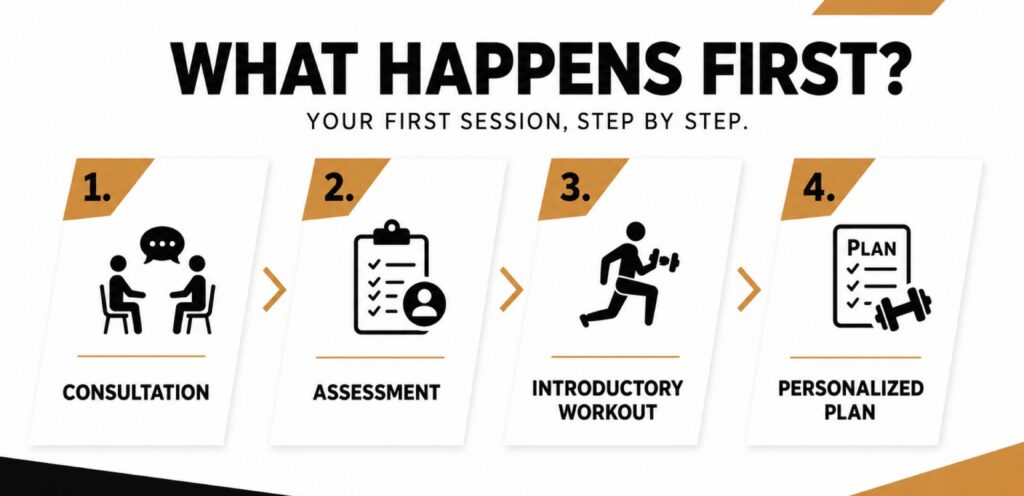
Before the Workout: Your Personal Trainer Consultation
A productive first session with a personal trainer usually begins with conversation rather than exercise.
Your consultation gives your personal trainer an opportunity to understand what brought you in and what you want your training to accomplish. You may discuss your current activity level, previous exercise experience, schedule, challenges, preferences, and short- and long-term goals.
For example, your priorities might include:
- Building strength
- Losing body fat
- Improving everyday movement
- Increasing energy and stamina
- Establishing a consistent exercise routine
- Feeling more confident in the gym
- Creating healthier long-term habits
This conversation also allows you to ask questions. If you are still deciding how to start with a personal trainer, discussing expectations early can help establish a productive coaching relationship.
Good coaching starts with understanding the individual, not immediately assigning a generic workout.
What Happens During a Personal Training Assessment?
After discussing your goals, the next part of your personal training experience may involve establishing a practical starting point.
A personal training assessment helps your trainer understand your current abilities so that exercises, resistance levels, and progressions can be selected appropriately.
Depending on your goals and training history, this may include observing basic movement patterns, balance, mobility, coordination, strength, or general conditioning. The purpose is not to score or judge your fitness. It is to gather useful information for your program.
For clients who want additional insight into changes beyond the number on a scale, body composition analysis can also provide information that supports more meaningful fitness progress tracking.
Why Your Starting Point Matters
Two people can share the same goal while needing very different programs.
For example, two beginners may both want to become stronger. One may need additional work on basic movement control and stability, while another may be ready to progress more quickly into resistance exercises.
That is one reason personal training for beginners should be individualized. Your starting point determines the most appropriate next step.
Learning the Movements Before Chasing Intensity
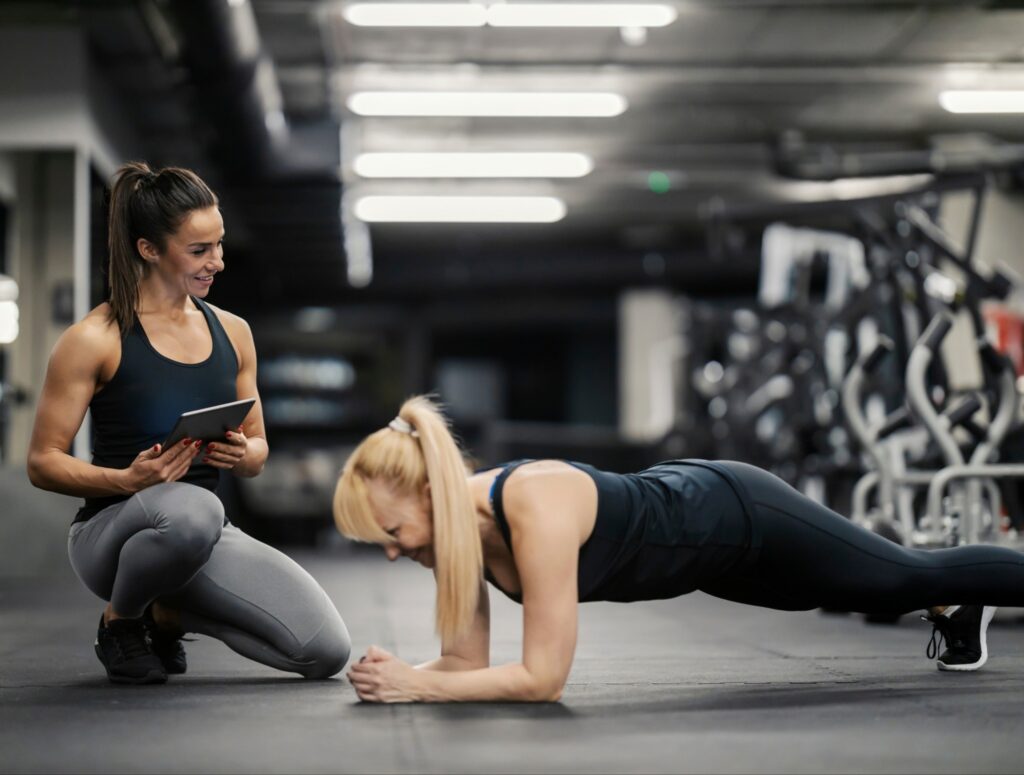
Your first session does not need to be your hardest session. One of the most important parts of understanding how personal training works is recognizing that effective training is progressive. Before adding more weight, repetitions, speed, or complexity, it is important to establish good movement patterns and appropriate exercise technique.
Your trainer may introduce movements such as squats, hinges, pushes, pulls, carries, or core exercises depending on your ability and goals.
At MK Fitness, we emphasize movements that translate into greater strength and capability in everyday life. Our approach to functional training focuses on building useful strength, movement quality, stability, mobility, and overall fitness rather than simply completing exercises for the sake of exhaustion.
For beginners especially, learning how an exercise should feel can be just as valuable as completing the exercise itself.
Will You Work Out During Your First Session?
Usually, at least part of the session can involve exercise, although the exact structure will depend on your needs.
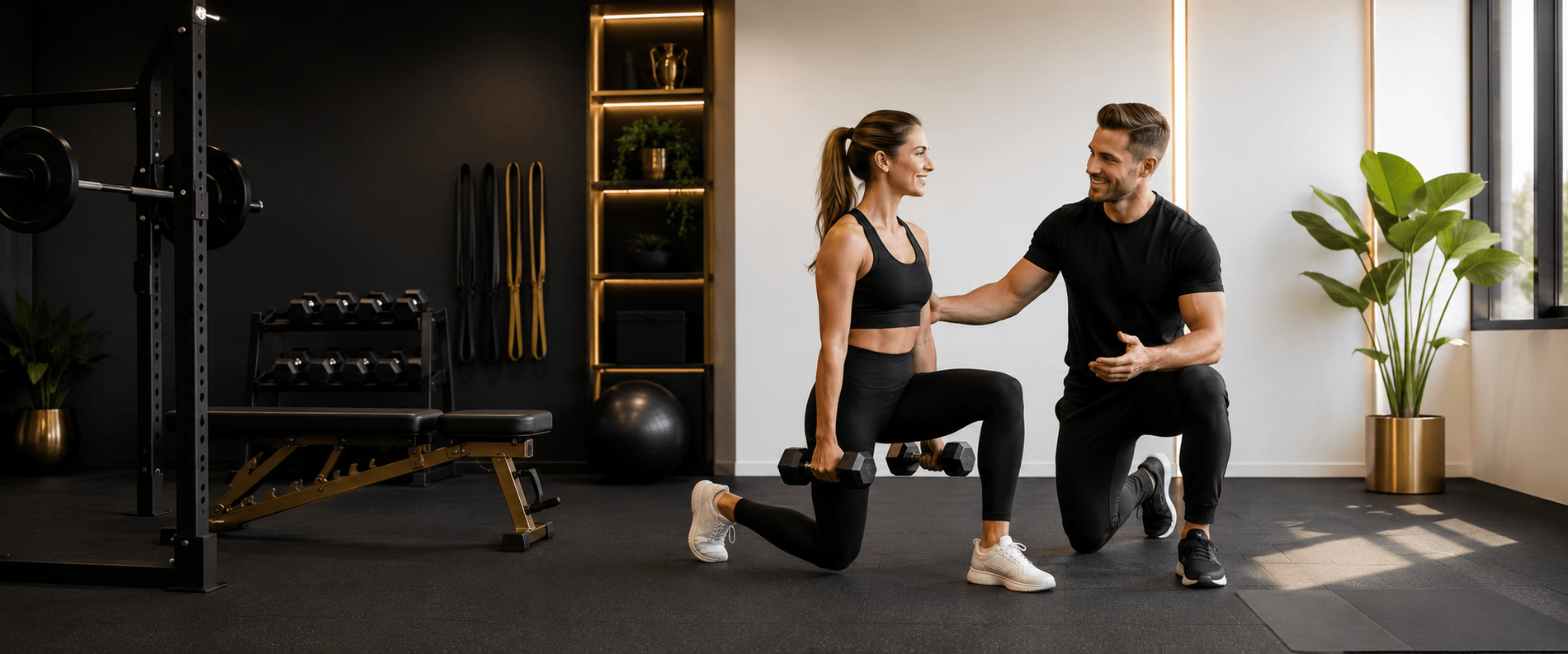
Your trainer may use a manageable introductory workout to observe how you respond to coaching, different movements, and physical effort. Rather than trying to push you to your limit, the goal is to establish an appropriate training level.
A first workout might include:
- A structured warm-up
- Foundational strength movements
- Mobility or stability exercises
- Light-to-moderate resistance training
- Conditioning appropriate to your current fitness level
- Cooldown or recovery work
The session can also help your trainer determine how much instruction you need, which movements feel comfortable, and where adjustments may be necessary.
A good personal trainer for beginners should be able to scale exercises instead of expecting every new client to perform the same workout.
Your Program Should Become More Personal From Here
The information gathered during your first session helps guide what happens next. Your goals, schedule, training frequency, current abilities, preferences, and progress should all influence your program. This is where personal training differs from simply following a random workout online.
At MK Fitness, we created our approach as a more personal alternative to one-size-fits-all gym programs. Training is customized around the individual, with coaching and accountability designed to support sustainable progress.
That becomes especially important when motivation changes from week to week. Understanding how personalized coaching helps you stay consistent can be just as important as knowing which exercises to perform. Structure creates a clear next step. Accountability helps you keep taking it.
How to Prepare for Your First Personal Training Session
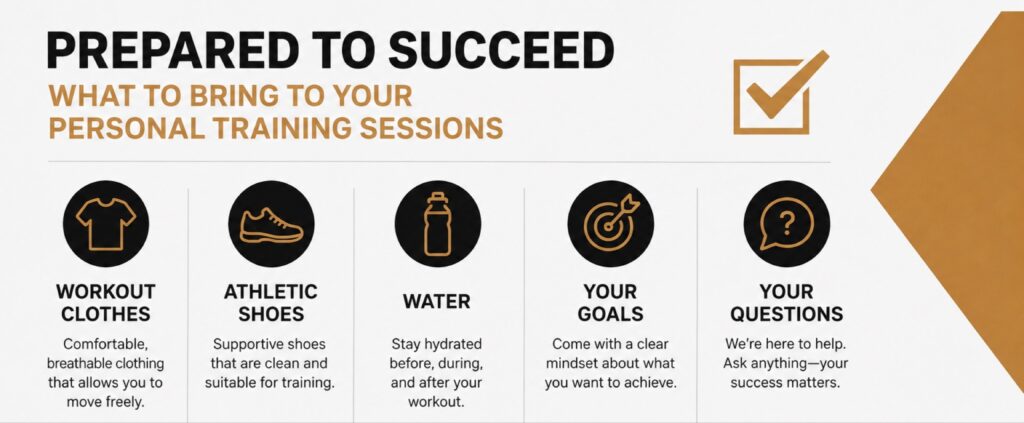
You do not need complicated equipment or extensive fitness knowledge before starting with a personal trainer.
A few simple preparations can make your session more productive:
- Wear comfortable clothing that allows you to move freely.
- Bring appropriate athletic shoes and water.
- Eat and hydrate normally rather than dramatically changing your routine for the session.
- Be prepared to discuss your goals and previous exercise experience.
- Share relevant limitations or concerns that could affect training.
- Ask questions whenever an exercise or instruction is unclear.
If you are completely new to structured exercise, our beginner fitness guide can also help you understand the fundamentals of beginning a sustainable fitness routine.
It is equally useful to become aware of common beginner workout mistakes, such as trying to progress too quickly, sacrificing technique for heavier weight, or assuming every workout needs to leave you exhausted.
What Happens After the First Session?
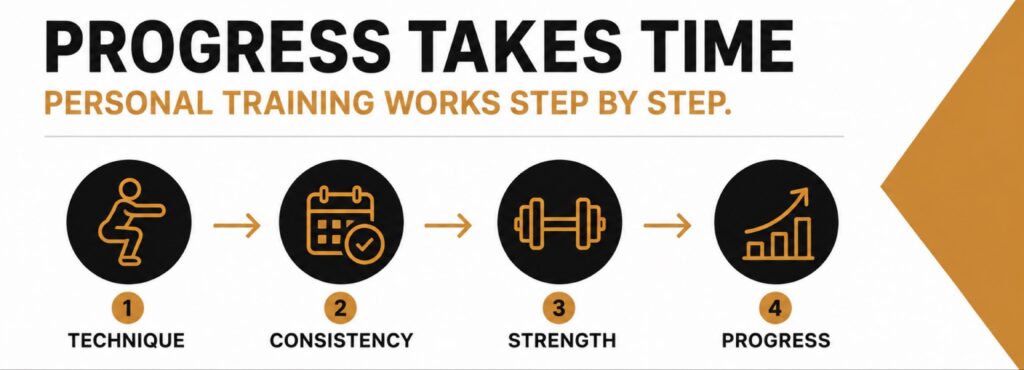
Your first session is the starting point, not the finished plan. As you continue training, your coach can adjust exercises, resistance, volume, and difficulty based on how you respond. Your progress may be reflected in better technique, improved strength, greater endurance, changes in body composition, or simply greater consistency.
Your goals also influence how your training develops. Someone focused primarily on reducing body fat, for example, may benefit from a program that combines resistance training, appropriate conditioning, nutrition habits, and accountability. Our approach to fat loss training emphasizes sustainable progress rather than quick-fix methods.
Training frequency should also fit your experience and recovery capacity. Understanding how often beginners should work out can help you avoid the common mistake of doing too much too soon.
What You Should Not Expect From Your First Session
Your first session should not feel like a test you have to pass. You should not be expected to arrive already knowing how to perform every movement, keep up with an advanced workout, or demonstrate a certain level of fitness before receiving support.
You also should not expect immediate transformation. Sustainable fitness is built through repeated training, appropriate progression, recovery, nutrition, and consistent habits.
If you have been wondering about the right time to hire a personal trainer, you do not need to wait until you are already in shape. Coaching can be especially valuable when you need help establishing that foundation.
Start With a Plan Built Around You
Your first session with a personal trainer is not about seeing how much you can lift or how hard you can push yourself on day one. It is about establishing the foundation for everything that follows.
With an understanding of your goals, abilities, lifestyle, and starting point, training can become more structured, purposeful, and sustainable.
At MK Fitness, we focus on personalized coaching, functional movement, accountability, and long-term lifestyle improvement rather than cookie-cutter programming. If you are ready to begin, schedule a consultation and take your first step with a training plan built around you.
Frequently Asked Questions
1. What happens in a first personal training session?
Your first personal training session will generally include a conversation about your goals, training experience, lifestyle, and current fitness level. It may also include a movement or fitness assessment followed by an introductory workout appropriate for your abilities.
2. Do I need to be fit before starting personal training?
No. Personal training for beginners is designed to meet you at your current level. You do not need to prepare by getting fit first. Your training program should progress from the abilities you have today.
3. Is the first personal training session difficult?
It should be appropriately challenging rather than unnecessarily difficult. Your trainer needs to understand how you move and respond to exercise before determining the right intensity and progression.
4. What should I tell my personal trainer during the consultation?
Be open about your goals, previous exercise experience, schedule, preferences, challenges, and any relevant limitations or concerns. The more useful information your trainer has, the more personalized your program can become.
5. How quickly will my personal trainer increase my workouts?
Progression depends on your technique, consistency, recovery, fitness level, and goals. Training may gradually become more challenging through additional resistance, repetitions, complexity, or exercise volume rather than making large changes all at once.
6. What should I bring to my first personal training session?
Comfortable workout clothes, athletic shoes, and water are generally enough. More importantly, arrive prepared to discuss your goals and ask questions.