
Most workouts can make you tired. A useful training program should do something more: give your body a reason to adapt.
That difference matters.
Two people can spend the same number of hours in the gym and make very different progress. One may repeat familiar exercises without knowing when to increase the challenge. The other may follow a plan that adjusts resistance, volume, exercise difficulty, and recovery as their abilities change.
This is one reason personal training delivers better results for many people. The advantage is not simply having someone beside you during a workout. It is having somebody manage the decisions that determine whether your training continues moving in the right direction.
That includes what you do, how much you do, when the program should change, and how progress is evaluated.
Better Results Start With Better Training Decisions
Exercise creates a stimulus. Your body responds to that stimulus, recovers, and gradually adapts.
But the workout has to be appropriate.
Too little challenge may eventually stop producing much change. Too much, too soon can make the program difficult to recover from or maintain. Changing exercises constantly can also make it harder to determine whether you are actually improving.
A personal trainer can help keep those variables within a useful range.
Instead of approaching every workout as an isolated session, personal training can connect one week of training to the next.
That distinction is important because personal training results are usually built through repeated, well-managed training rather than one unusually difficult workout.
1. Your Starting Point Changes the Program
Consider three people who all say, “I want to get stronger.”
One has never lifted weights. One has trained inconsistently for several years. The third is already reasonably strong but has stopped progressing.
They share the same broad goal, but giving all three the same workout would make little sense.
Their programs may need to differ:
- Starting loads
- Exercise variations
- Training volumes
- Rest periods
- Weekly frequencies
- Progression rates
- Technical priorities
This is where individualization becomes useful.
A trainer can first determine what you can currently do and then build from there. For someone completely new to exercise, that may mean developing basic movement control before substantially increasing resistance. An experienced client may instead need changes to training volume, exercise selection, or progression.
If you are new to structured exercise, our beginner fitness guide explains how that starting phase can look.
2. Progression Stops Workouts From Becoming Repetitive
Performing an exercise for several weeks is not necessarily a problem. Performing it for several months without changing anything may be.
For resistance training to continue producing adaptation, the challenge eventually needs to progress.
That does not mean adding weight every workout.
Progress can involve:
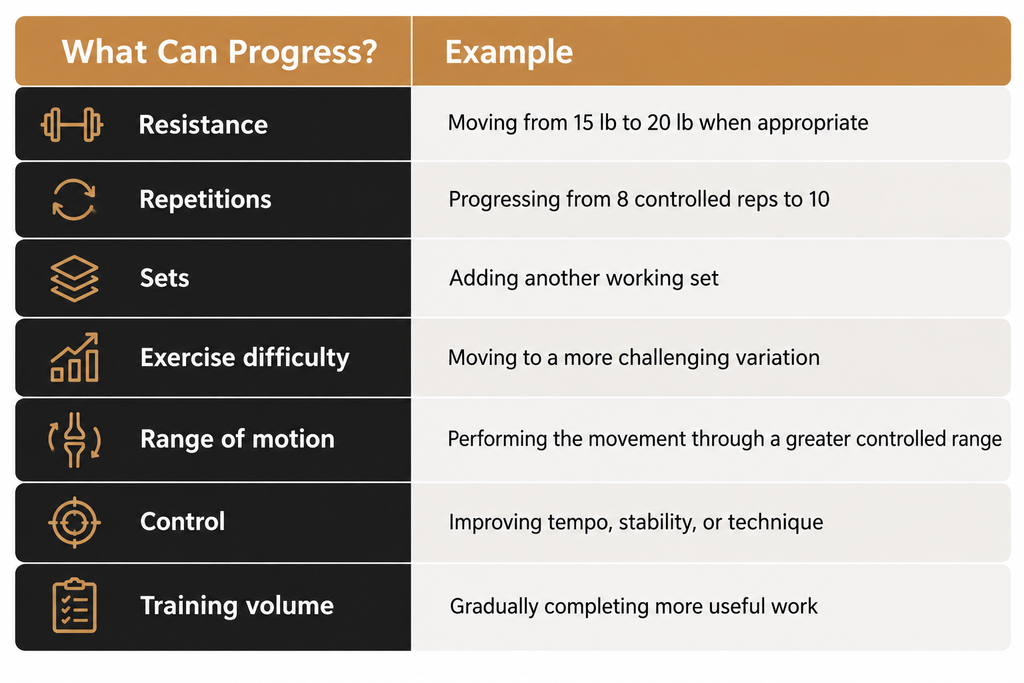
A trainer can decide which variable makes the most sense to change instead of automatically making every exercise heavier.
That matters because more weight is not always better progress.
Sometimes the more useful improvement is performing the same load with noticeably better control.
3. Feedback Can Change the Quality of the Same Exercise
Imagine doing a squat for ten repetitions.
You complete all ten, so on paper the set looks successful. But perhaps your position changes on the final few repetitions, you are using a variation poorly suited to your current mobility, or you are rushing the movement to finish the set.
Simply recording “10 reps completed” misses that information.
This is where real-time coaching can affect the quality of a workout.
Research comparing supervised and unsupervised resistance training has found that supervision can provide additional benefits in some circumstances. For example, an eight-week randomized study of resistance-trained adults found greater strength improvements in the supervised group, although this does not mean supervision guarantees better outcomes for every person or goal.
A trainer can watch what is happening during the set and adjust:
- Exercise setup
- Range of motion
- Resistance
- Repetition quality
- Tempo
- Exercise variation
The exercise name may remain exactly the same. The way it is performed can become much more useful.
For people whose goals extend beyond gym-specific strength, functional training can also focus on strength, stability, mobility, and movement patterns that carry into everyday activities.
4. The Program Can Be Adjusted to the Result You Want
A training plan should change depending on what you are trying to improve.
Someone training primarily for strength may need a different combination of resistance, repetitions, and sets than someone focused on building muscle or improving power. ACSM’s 2026 resistance-training guidance specifically notes that programming variables should be matched to the desired outcome rather than applied the same way to everyone.
For example, a trainer may adjust:
- Load when the goal is increasing strength
- Weekly training volume when muscle growth is a priority
- Movement speed and resistance when developing power
- Exercise difficulty as coordination and strength improve
- Overall workload when recovery, stress, or schedule changes
This is where personalized coaching becomes more valuable than simply collecting exercises.
A workout can contain perfectly good movements and still be poorly matched to the person doing it. The exercises need to be organized and progressed according to the client’s current ability and the result they are working toward.
5. What Happens Between Sessions Matters Too
You spend far more time outside the gym than inside it.
That means a strong workout cannot compensate indefinitely for habits that work against the goal.
Fat loss is a good example.
Increasing exercise can be useful, but doing endless cardio without considering nutrition, recovery, and everyday habits may not produce the outcome someone expects.
MK Fitness’s fat loss training takes a broader approach by combining tailored training with nutrition guidance.
The same principle applies to other goals.
Someone trying to gain strength may need appropriate recovery between demanding sessions. A busy professional may need a program that can survive unpredictable work weeks. Someone returning to exercise may initially need a smaller workload they can repeat consistently.
Better programming considers the rest of your life instead of pretending it does not exist.
6. Progress is Easier to Manage When You Measure the Right Things
One of the most useful things a trainer can do is establish what “progress” actually means.
Suppose the goal is body recomposition.
If you only monitor body weight, you may miss useful information about changes in muscle and body fat.
That is why MK Fitness offers body composition analysis, including InBody measurement, as another way to establish a baseline and monitor changes.
For another client, relevant measurements may look completely different.
Strength Goal
You might track:
- Weight used
- Repetitions completed
- Exercise variations
- Range of motion
- Technical quality
General Fitness Goal
Useful markers could include:
- Workout capacity
- Recovery between sets
- Movement quality
- Training consistency
- Everyday energy
Fat-Loss Goal
Depending on the individual, measurements may include:
- Body weight trends
- Body composition
- Circumference measurements
- Training performance
- Nutrition consistency
A useful measurement should help answer a question.
If a number never influences what you do next, collecting it has limited value.
7. A Trainer Can Change the Plan Before Progress Completely Stops
This may be one of the least obvious advantages of coaching.
Imagine that you have completed the same training plan for eight weeks.
Your squat has improved, but another exercise has stopped progressing. You are also taking longer than usual to recover from your lower-body sessions.
Without experience, you might respond by simply working harder.
A coach has more options.
They might:
- Reduce volume temporarily
- Change one exercise rather than the whole program
- Keep the weight stable and improve technique
- Change repetition ranges
- Adjust weekly training frequency
- Review recovery
- Progress another part of the program while maintaining the stalled movement
Good programming is partly about knowing what not to change.
If five things are working and one is not, rewriting the entire workout can create more problems than it solves.
That ongoing adjustment is an important part of the results from personal training that is easy to overlook when comparing workouts only exercise by exercise.
8. Better Results Do Not Always Mean Faster Results
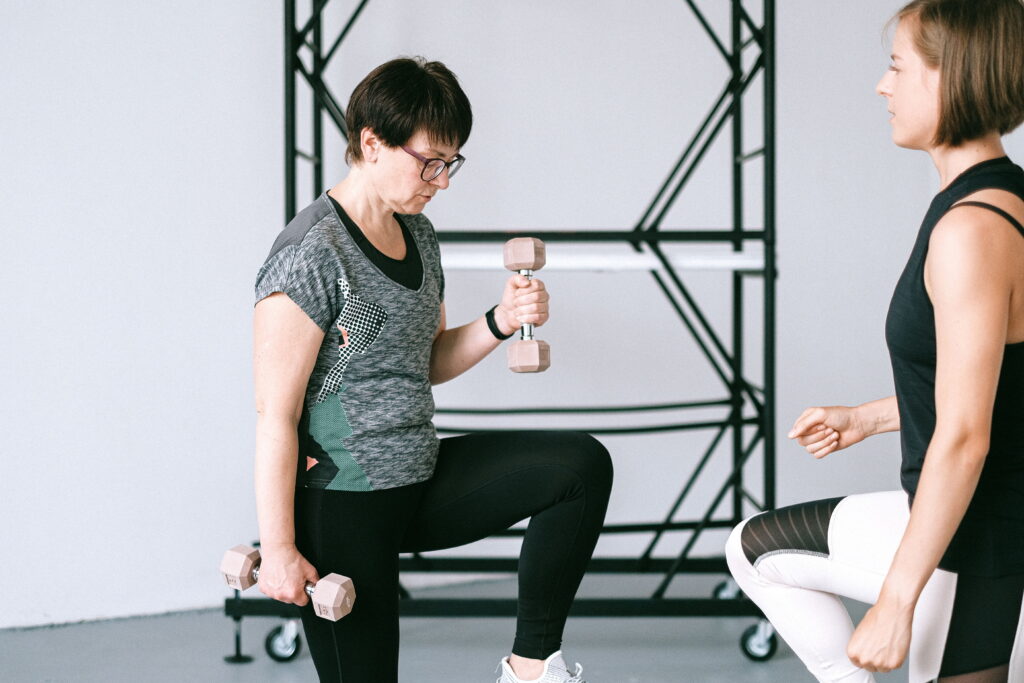
Fast progress can sound appealing, but meaningful fitness changes do not all happen on the same timeline.
Someone new to training may notice early improvements in strength, coordination, or workout confidence. Changes in body composition, endurance, or long-term habits often take more time and depend on consistency both inside and outside the gym.
Instead of chasing rapid results from personal training, it is more useful to look for steady signs that the program is working, such as improved performance, better movement, increased strength, or measurable changes in body composition.
At MK Fitness, training is built around realistic progression, with programs adjusted to the client’s goals, fitness level, and lifestyle rather than pushing for short-term results that are difficult to maintain.
What Should Better Personal Training Results Actually Look Like?
Better results do not have to mean dramatic before-and-after photos.
Over time, good coaching should give you evidence that something is changing.
That could look like:
- Using more resistance while maintaining good control
- Completing more repetitions at the same resistance
- Moving through an exercise more comfortably
- Recovering better between efforts
- Becoming more consistent with training
- Improving body-composition measurements
- Understanding how to adjust your own workouts
- Feeling more capable during everyday activities
The important word is measurable.
If months pass without any meaningful change, there should be a discussion about why.
Can You Get Good Results Without a Personal Trainer?
Absolutely.
A trainer is not required for fitness progress.
Someone who can choose appropriate exercises, manage training volume, progress their program, monitor technique, recover properly, and remain consistent can make excellent progress independently.
Research also supports being careful with blanket claims about supervision. A 2024 systematic review involving 34 studies and 2,830 older adults found benefits from both supervised and unsupervised exercise. Supervised programs showed some additional advantages in certain outcomes, but the researchers also noted limitations in the evidence and the need for further high-quality research.
The question is therefore not whether training alone “works.”
It does.
The question is whether professional coaching helps you make better training decisions than you are currently making by yourself.
Our guide comparing personal training vs. training alone explores that difference in more detail.
Where Personal Training Adds the Most Value
Personal coaching becomes particularly useful when there is a gap between effort and direction.
You may be exercising regularly but have no system for progression. You may understand individual exercises but struggle to combine them into a program. Or you may know exactly what to do but rarely manage to follow through.
That is why personal training delivers better results for many clients: it improves the process behind the workout.
It connects assessment, programming, coaching, progression, measurement, and adjustment instead of leaving those decisions to chance.
If you are still deciding whether coaching makes sense at your current stage, read our guide on the right time to hire a personal trainer.
And if you have already decided to begin, our guide on how to start with a personal trainer explains the next steps.
Build Progress You Can Actually Track
A productive training session has a purpose beyond making you sweat.
Over time, the program should show evidence that your body is adapting. That may mean greater strength, improved movement, better fitness, changes in body composition, or simply becoming capable of doing things that once felt difficult.
The role of personal training is to make those outcomes less dependent on guesswork.
At MK Fitness, training is built around the client’s goals, fitness level, schedule, and lifestyle. New clients can also start with a free InBody measurement session to establish a clearer baseline before building their training plan.
If you are looking for one-on-one personal training in Glendale, you can start by booking a free consultation with MK Fitness. Book your free consultation.
Frequently Asked Questions
1. How Do I Know if My Personal Training Program Is Working?
Look for changes that relate directly to your goal. That might include lifting more weight with good form, completing more repetitions, moving with better control, improving workout capacity, becoming more consistent, or seeing changes in body composition.
The most useful signs of progress are the ones that can be compared over time.
2. Can Personal Training Help if I Already Know How to Work Out?
Yes. Even experienced exercisers can benefit from an outside perspective.
A trainer may identify areas that are easy to overlook when you train alone, such as exercise selection, progression, technique, workload, or whether your current routine still matches your goal.
3. Are Harder Workouts More Effective?
Not always. A workout does not need to leave you exhausted to be productive.
Effective training should provide enough challenge to support progress while still allowing you to maintain good technique, recover properly, and continue training consistently.
4. What Should I Look for in a Personal Training Program?
A well-designed personal training program should have a clear purpose behind the exercises and a way to track progress.
It should also account for your:
- Current fitness level
- Main goal
- Training experience
- Schedule
- Recovery
- Movement ability
- Progress over time
The program should be adjusted as your needs and abilities change rather than staying exactly the same month after month.
5. Can Beginners Get Results With Personal Training?
Yes. Personal training can be particularly useful for beginners who want help learning exercises, choosing an appropriate starting point, and understanding how to progress without doing too much too soon.
Our first personal training session guide explains what you can expect when getting started.