
There is no single moment when everyone should start working with a personal trainer. For some people, it makes sense at the very beginning, when they are unsure how to structure workouts or use equipment confidently. For others, the need becomes clearer after weeks or months of inconsistent training, stalled progress, or repeated attempts to follow routines that do not fit their lifestyle.
You do not need to reach a certain fitness level before working with a trainer. It is about whether expert guidance would make your next step clearer, more efficient, and easier to maintain.
At MK Fitness, personal training is built around the individual rather than a fixed program. That means your starting point, schedule, fitness level, goals, and day-to-day routine all help shape how you train.
If you are unsure whether personal training makes sense for you right now, the situations below can help you assess it.
1. You’re Ready to Start, but Need Direction

Walking into a gym without a plan can leave you wondering which exercises to choose, how much weight to use, how many sets to perform, or how often you should train.
This is one of the clearest times to consider working with a trainer.
Current U.S. physical activity guidelines recommend that adults work toward at least 150 minutes of moderate-intensity aerobic activity each week, or 75 minutes of vigorous activity, plus muscle-strengthening activity on at least two days per week. However, people who are inactive do not need to jump immediately to those amounts. Starting with manageable amounts of activity and gradually building up is an appropriate approach.
A trainer can turn those broad recommendations into an actual plan based on your starting point, schedule, and goals.
If exercise is completely new to you, our beginner fitness guide explains what getting started can look like.
2. You Keep Starting and Stopping
Sometimes the problem is not knowing that exercise is important. It is making exercise happen consistently.
You may train enthusiastically for two weeks, miss several workouts when work becomes busy, and then feel as though you need to start over. Or perhaps you have collected workout plans, fitness apps, and exercise videos but rarely follow one program long enough to see how well it works.
That is a good reason to hire a personal trainer.
Scheduled sessions create structure around training, while a personalized program can be built around the time you realistically have available rather than an ideal schedule you cannot maintain.
The American College of Sports Medicine notes that a personal trainer can provide motivation and accountability while helping clients incorporate exercise into their schedules.
Consistency still depends on you, but coaching can remove some of the uncertainty around what to do each time you train.
3. You are Working Hard but Not Seeing the Progress You Expected

Another sign that it may be time for coaching is when you have been exercising consistently, but your progress has slowed.
That does not automatically mean you need to train harder.
Your program may need changes in exercise selection, resistance, volume, frequency, recovery, or progression. Your expectations may also need to be adjusted to match your goal and starting point.
A trainer can review what you are currently doing and help identify where your program may need to change instead of simply adding more exercise.
Progress also should not be judged only by scale weight. Depending on your goal, useful indicators may include strength, movement quality, fitness, measurements, body composition, energy, or how consistently you can perform your training.
At MK Fitness, clients can use body composition analysis to look beyond body weight and track changes such as body fat and muscle mass. MK Fitness currently offers a free InBody measurement session as part of getting started.
4. You Have a Specific Goal but Are Unsure How to Reach It
Having a fitness goal does not automatically mean you know which training approach will get you there.
Perhaps you want to become stronger, improve your overall fitness, lose body fat, move more comfortably in everyday life, or return to regular exercise after a long break.
Once the goal becomes specific, the program needs to become more specific too.
For example, someone focused on everyday strength and movement may benefit from functional training, while someone whose primary goal is reducing body fat may need an approach that considers both training and nutrition rather than simply adding more cardio. MK Fitness’s fat loss training combines tailored workouts with nutrition guidance.
The value of personal training in these situations is not having somebody count repetitions. It is having a plan in which the exercises, progression, and coaching are connected to the result you are actually trying to achieve.
5. You are Unsure Whether You are Performing Exercises Correctly
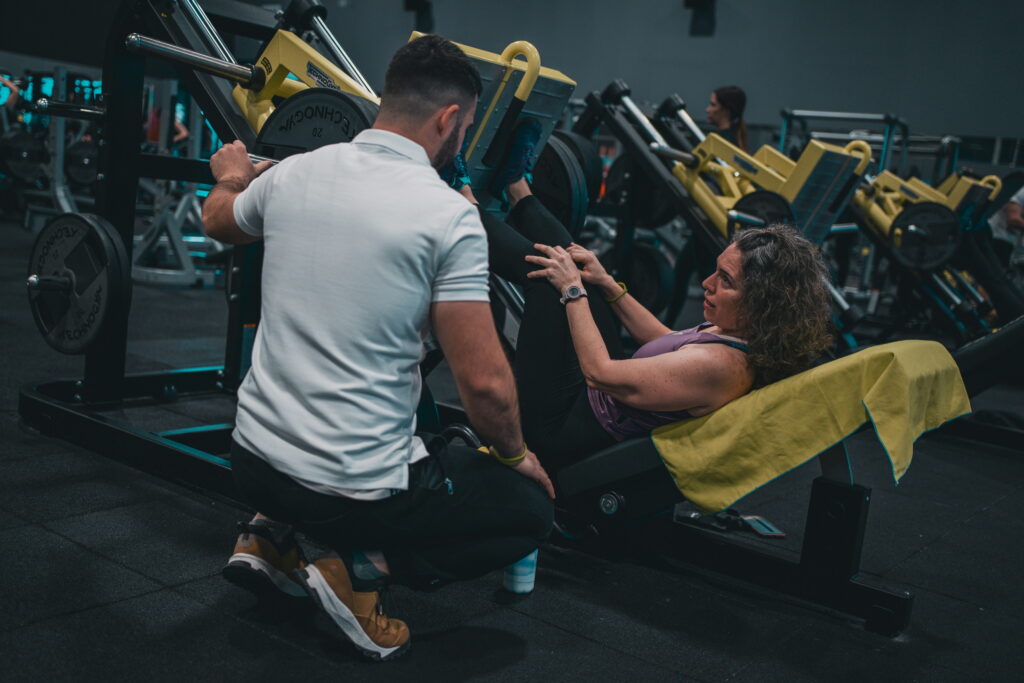
Watching an exercise online and performing it yourself are two different things.
You may be unsure about your setup, range of motion, posture, tempo, or whether an exercise is appropriate for your current ability.
A trainer can observe how you move and provide real-time feedback. They can also modify an exercise when a different variation is more suitable.
This can be especially useful for beginners who are learning resistance training for the first time.
The goal is not to make every movement look identical from person to person. Bodies, mobility, training histories, and goals differ. The aim is to choose exercises that suit your needs and learn how to perform them with better control and confidence.
6. Your Workouts No Longer Challenge You in a Productive Way
Repeating the same routine indefinitely can eventually stop providing the same training stimulus.
On the other hand, changing exercises constantly can make it difficult to measure whether you are actually improving.
A well-structured program sits between those two extremes. It gives you enough consistency to practise movements and track progress while adjusting variables when appropriate.
A trainer can help decide when it makes sense to increase resistance, repetitions, sets, exercise difficulty, or another training variable rather than changing the entire workout simply because it feels familiar.
This is one of the reasons personalized programming can be useful even for someone who already has gym experience.
7. You Want Accountability Without a One-Size-Fits-All Program
Some people know enough to exercise independently but still perform better when somebody expects them to show up.
That is a valid reason to work with a trainer.
Accountability is particularly useful when fitness repeatedly gets pushed behind work, family responsibilities, or other commitments.
But effective accountability should not mean being pressured into an unrealistic routine. A training schedule needs to fit your actual life.
At MK Fitness, personal training is built around the client’s goals, fitness level, schedule, and lifestyle rather than using the same program for everyone.
When Might You Not Need a Personal Trainer?
Personal training can be valuable, but it is not a requirement for being active or getting fitter.
You may be comfortable training independently if you:
- Already know how to structure an appropriate program
- Can perform your exercises confidently
- Progress your workouts systematically
- Stay consistent without external accountability
- Know when to adjust your training
- Are continuing to make progress toward your goals
Even then, some people choose occasional coaching to review technique, update a program, or work toward a new goal.
The better question is therefore not whether everybody needs a trainer. It is whether professional guidance would solve a problem that is currently making your progress more difficult.
When Should You Speak With a Healthcare Professional First?
A personal trainer is not a substitute for a physician, physical therapist, or another qualified healthcare professional.
Moderate physical activity is considered safe for most people, but the CDC advises people with chronic health conditions to discuss appropriate types and amounts of physical activity with a healthcare professional or physical activity specialist. It also recommends medical guidance before beginning vigorous-intensity activity in certain circumstances, including for people who have been inactive and have particular health considerations.
If you have a medical condition, significant pain, a recent injury, or have been given exercise restrictions, get appropriate medical guidance rather than expecting a personal trainer to diagnose or treat the problem.
How to Hire a Personal Trainer
Knowing how to hire a personal trainer is just as important as deciding that you want one.
Do not choose solely based on appearance, social media following, or who promises the fastest transformation.
ACSM recommends considering a trainer’s education, recognized professional certification, first aid and CPR credentials, relevant experience, communication style, and whether the trainer is a good match for your goals and personality.
Before committing, ask how the trainer:
- Assesses new clients
- Builds individualized programs
- Tracks progress
- Adjusts training as you improve
- Approaches your particular goal
- Handles scheduling and missed sessions
- Communicates outside scheduled workouts
- Prices individual sessions or packages
A consultation can also tell you a lot about the trainer. They should spend time learning about your goals, exercise background, lifestyle, preferences, and current ability rather than immediately putting you through a generic workout.
If you want to see how the process normally begins, read our guide on how to start with a personal trainer and what happens during your first personal training session.
How Much Does It Cost to Hire a Personal Trainer?
If you are wondering how much it costs to hire a personal trainer, there is no meaningful single price that applies to every trainer or every client.
Cost can depend on:
- Location
- Trainer qualifications and experience
- Session length
- One-on-one versus small-group training
- Number of sessions purchased
- Training frequency
- Facility or studio
- Whether nutrition or other services are included
For that reason, asking how much it costs to hire a personal trainer should be followed by another question: what exactly is included?
Compare the overall service rather than the session price alone. Find out whether the program includes individualized programming, assessments, progress tracking, nutrition guidance, or other support.
At MK Fitness, new clients can begin with a free consultation to discuss their goals and determine which training approach fits their needs. A free InBody measurement session is also currently offered to help establish a clearer picture of body composition before tracking progress over time.
Is Hiring a Personal Trainer Worth It?
Is hiring a personal trainer worth it? It depends on what kind of guidance and support you are looking for.
Personal training may be worth considering if professional guidance helps you:
- Stop guessing about what to do
- Learn exercises and movement patterns more confidently
- Follow a program designed around a specific goal
- Train consistently
- Make appropriate changes as you progress
- Use your available workout time more effectively
- Understand how your training fits into a longer-term plan
If you already do all of those things independently, ongoing one-on-one training may be less necessary.
The value is not simply having another person standing beside you while you exercise. It comes from the quality of the programming, coaching, feedback, and accountability you receive.
So, When is the Right Time to Hire a Personal Trainer?
You do not have to reach a certain fitness level first.
For many people, the right time to hire a personal trainer is when they are ready to work toward a goal but need more structure, knowledge, feedback, or accountability than they currently have.
That might be your first week in a gym. It might be after months of inconsistent workouts. Or it might be after years of training independently when you decide you want a more focused approach.
At MK Fitness in Glendale, personal training is designed around your current fitness level, goals, schedule, and lifestyle. The focus is on building strength, improving movement, and creating habits you can continue rather than relying on quick fixes.
You can start with a free consultation and InBody measurement to establish where you are now and discuss what you want to achieve.
Book your free consultation with MK Fitness
Frequently Asked Questions
1. Should I Hire a Personal Trainer if I am a Complete Beginner?
You can. Beginners are one group that may particularly benefit from coaching because they are still learning exercise selection, technique, workout structure, and progression. You can start personal training from whatever fitness level you are currently at. MK Fitness states that its programs can be adapted to a client’s current fitness level.
2. Is Hiring a Personal Trainer Worth It for Weight Loss?
It can be, particularly if you need help building a sustainable exercise routine and coordinating your training with appropriate nutrition habits. Exercise can be part of a successful fat-loss plan, especially when it is paired with realistic nutrition habits and consistent training. MK Fitness combines personalized workouts with nutrition guidance to support long-term progress.
3. How Often Should I Meet With a Personal Trainer?
There is no universal number. The appropriate frequency depends on your goals, experience, budget, schedule, how often you train independently, and how much coaching you need. Some beginners benefit from more frequent supervision while learning, while more experienced clients may need less.
4. What Does Personal Training Typically Cost?
Personal training prices vary based on the trainer, location, session format, duration, package size, and services included. Rather than relying on a national average that may not reflect your local market or the service you receive, ask the trainer for current pricing and exactly what is included.
5. How Do I Know if a Personal Trainer Is Qualified?
Ask about education, recognized certifications, CPR and first aid training, experience, and whether the trainer has worked with people who share your goals. You should also pay attention to how well the trainer asks questions and communicates. A qualified trainer should understand the limits of their professional role and refer you to an appropriate healthcare professional when an issue falls outside their scope.


