
Training alone gives you flexibility and control, which can work well if you already know how to structure your workouts and stay consistent.
But it also means making every training decision yourself, from exercise selection and resistance to technique and progression.
That is the real difference when comparing personal training vs. training alone. It is not simply whether another person is standing beside you. It is about who is responsible for making and adjusting the decisions behind your workouts.
So, is personal training better? Not automatically for everyone. The better option depends on your experience, goals, consistency, and how confidently you can manage your own training.
Personal Training vs. Training Alone at a Glance
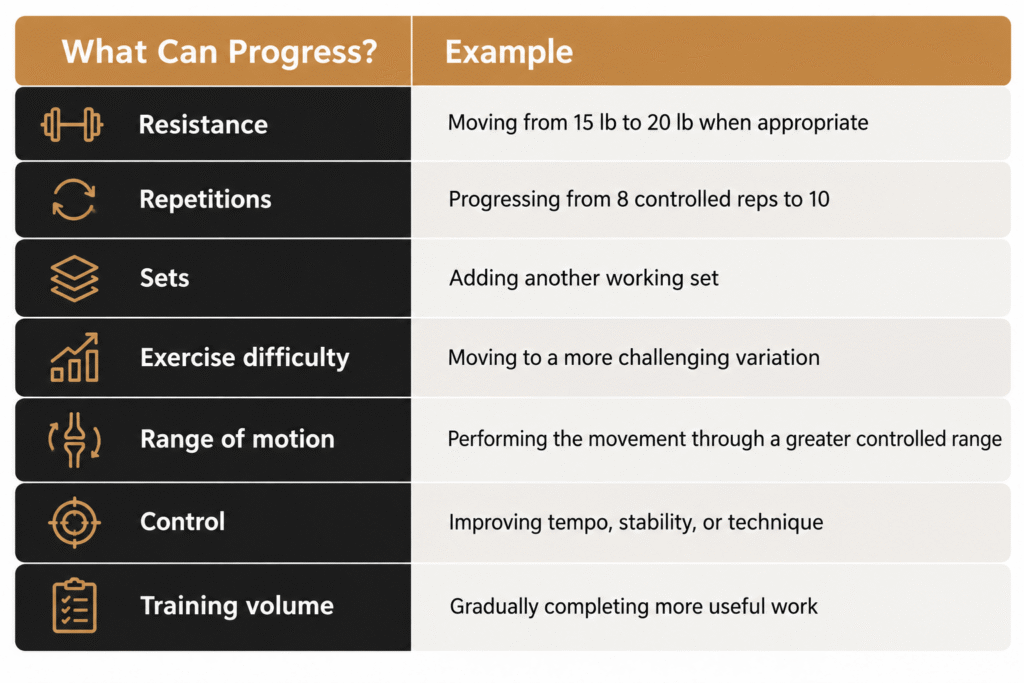
Neither column automatically produces results. The question is which environment helps you train effectively and consistently.
What Training Alone Actually Requires
Working out independently can look simple from the outside: choose several exercises, complete your sets, and repeat the process next week.
Effective self-directed training involves more than that.
You need to answer questions such as:
- Does this routine train what I actually want to improve?
- Is my current workload appropriate?
- Should I add resistance, repetitions, sets, or difficulty?
- Is my technique changing as I become tired?
- Am I training enough without doing unnecessary work?
- Is poor progress caused by the program, recovery, consistency, or unrealistic expectations?
These become easier to answer with experience.
Current resistance-training research supports progressive training rather than simply repeating the same workload indefinitely. The 2026 American College of Sports Medicine position statement reviewed 137 systematic reviews involving more than 30,000 participants and found that resistance training improves strength, muscle size, power, endurance, balance, and several measures of physical function. It also found that particular training variables can be adjusted depending on the desired outcome.
In other words, simply exercising and managing training effectively are not quite the same thing.
If you are new to exercise, MK Fitness’s beginner fitness guide is a useful place to understand the fundamentals before deciding how much guidance you need.
What Changes When You Work Out With a Personal Trainer?
The biggest difference in working out with a personal trainer vs. alone is that somebody else can observe the process rather than relying entirely on what the workout looks like on paper.
Suppose your program calls for three sets of an exercise.
Completing all three tells you that the workout was done. It does not necessarily tell you whether the resistance was appropriate, whether your technique remained controlled, whether the exercise suited your current ability, or whether you are ready to progress.
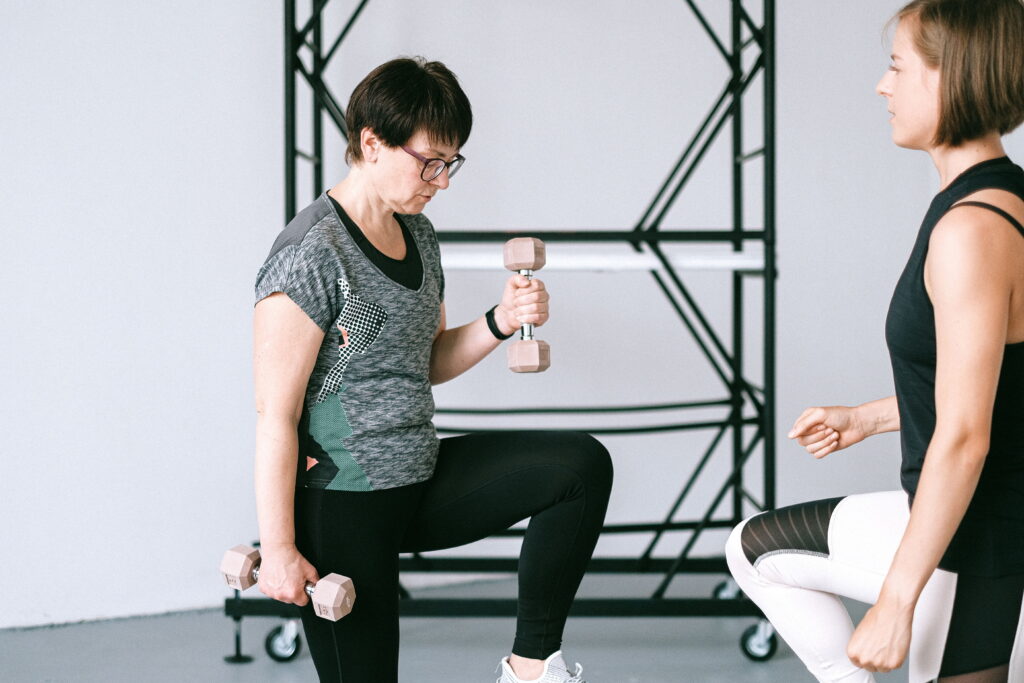
During a workout with a trainer, those details can be assessed as they happen.
The trainer can change the resistance, adjust the setup, provide a cue, select another variation, or progress the exercise when appropriate. That makes coaching responsive rather than simply prescriptive.
This is particularly valuable when you are learning unfamiliar movements. MK Fitness’s guide to your first personal training session explains what that initial coaching process can involve.
Does Supervised Training Actually Make a Difference?
There is evidence that it can.
A 2025 randomized controlled trial compared in-person supervised resistance training, app-guided training, and self-guided training over 10 weeks. All three groups improved strength, which is important: training alone can absolutely work.
However, adherence was highest with in-person supervision at 88.2%, compared with 81.2% for app-guided training and 52.2% for the self-guided program. The supervised group also achieved greater squat-strength improvements than the other groups.
Another randomized study comparing the same resistance-training program performed with and without direct supervision also found advantages from supervision for some muscular adaptations.
These studies should not be interpreted as proof that every person needs a trainer. They demonstrate something more useful: how a program is delivered can affect how well people follow it and, in some circumstances, the results they achieve.
That distinction matters when comparing a personal trainer vs. no personal trainer.
When Training Alone Can Be the Better Choice
Personal training should not be presented as necessary for every workout.
Training alone may make sense when you already have enough experience to manage your own program confidently.
For example, independent training may suit you if you:
- understand basic resistance-training principles;
- can perform your exercises confidently;
- know how and when to progress your program;
- have a routine appropriate for your goal;
- consistently complete your planned workouts; and
- can recognize when something needs to change.
It also gives you maximum flexibility. If your schedule changes frequently, being able to train whenever an opening appears can be convenient.
The key is whether that freedom helps or hurts your consistency.
Someone who trains independently three times every week with a sensible program may accomplish far more than someone who has an excellent plan but rarely follows it.
If you are still deciding what a reasonable weekly schedule looks like, our guide to how often beginners should work out explains how training frequency can develop as your fitness improves.
When Personal Training Becomes More Valuable
The case for coaching becomes stronger when uncertainty is affecting what happens during your workouts.
Consider personal training when you repeatedly encounter one of these situations.
You Spend More Time Guessing Than Training
If every gym visit starts with deciding what exercises to do, copying a new routine, or wondering whether your current program is working, the problem may not be effort. It may be a lack of structure.
Personal training at MK Fitness is built around an individualized plan rather than requiring the client to assemble that structure independently.
You Cannot Tell Whether You Are Progressing
Progress is not limited to body weight.
Depending on your goal, it may include increased strength, improved movement quality, changes in body composition, greater work capacity, or simply being able to perform activities that previously felt difficult.
For goals involving changes in fat and muscle, body composition analysis can provide information that body weight alone cannot show.
Your Goal Requires a More Specific Approach
The more specific your fitness goal becomes, the more important it is for your training plan to match it.
Someone interested in becoming stronger and moving more effectively in everyday life may need a different approach from someone primarily focused on reducing body fat.
MK Fitness’s functional training focuses on strength, stability, mobility, and practical movement, while its fat loss training combines individualized training with nutrition guidance.
Your training should be shaped by what you are actually trying to improve, not built from the same routine used for everyone.
You Understand Exercise, but Struggle to Stay Consistent
Knowing how to work out does not always make it easier to follow through.
You may be comfortable with different exercises and still find yourself skipping sessions when your schedule gets busy, your energy drops, or training starts to feel less urgent.
In that situation, coaching provides a scheduled point of commitment and a program that can adapt when circumstances change. Our guide on how personalized coaching helps you stay consistent looks more closely at that side of the process.
Personal Training vs. Group Classes
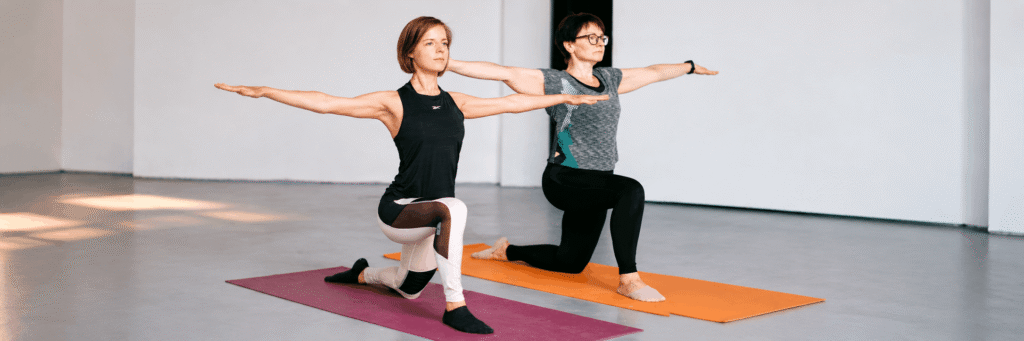
There is another option between fully independent workouts and one-on-one coaching: training with other people.
The difference between personal training and group classes primarily comes down to how individualized the session can be.
A class typically needs to work for several participants at once. One-on-one training can be adjusted around one person’s ability, goals, training history, and progress.
Small-group training can sit somewhere between the two. It provides the social energy of training alongside others while allowing more individual attention when the group remains intentionally small.
If atmosphere and training with others motivate you, a small-group setting may appeal to you. If you want the session built specifically around your needs, individual coaching provides greater personalization. If you are considering one-on-one coaching, our guide on how to start with a personal trainer explains what to expect before you begin.
A Simple Way to Decide Between Personal Trainer vs. Working Out Alone
Instead of asking whether personal training is universally better, ask yourself five questions:
- Do I know what I should be doing?
If your current program fits your goals and you know how to adjust it as you progress, training on your own may work well. If you are constantly searching for workouts, coaching can provide direction. - Can I judge my own technique confidently?
Experience makes self-assessment easier, although outside feedback can still reveal things you may not notice yourself. - Do I know how to progress my workouts?
Repeating a routine is easy. The harder part is recognizing when your current approach is no longer working and knowing what to adjust next. - Am I actually consistent when nobody is expecting me to train?
Your answer may be more important than which program looks best on paper. - Am I getting the result I am training for?
If months of consistent work have produced little meaningful progress, your program may be worth reviewing.
If you are unsure how to answer several of these questions, it may be the right time to work with a personal trainer.
Ready to find out what your training could look like with a plan built around you? Book a free consultation with MK Fitness and start with a conversation about your goals, current fitness level, and next steps.
Frequently Asked Questions
1. Is Working With a Personal Trainer Better Than Training Alone?
It depends on the person. Personal training can be particularly useful when you need help with program design, exercise technique, progression, or consistency. Experienced exercisers who can confidently manage those areas may do very well training independently.
2. Does Personal Training Make Sense When You Are New to Exercise?
It can be, particularly when a beginner is unfamiliar with resistance training, exercise selection, equipment, or progression. A trainer can reduce the amount of trial and error involved in learning those basics. The benefits of personal training extend beyond simply having somebody supervise a workout.
3. Can You Combine Coached Sessions With Independent Workouts?
Yes. The two approaches can complement each other. Your trainer can structure coached sessions while recommending appropriate activities or workouts for the days you exercise independently.
4. When Should You Stop Working With a Personal Trainer?
There is no fixed timeline. Some people work with a trainer for a short period to build confidence and learn the basics, while others prefer ongoing coaching as their goals change. The right point to stop depends on how comfortable you feel managing your training independently.
5. Does Personal Training Guarantee Faster Results?
No. A trainer cannot guarantee a particular result. Your consistency, nutrition where relevant, recovery, starting point, and the appropriateness of the program all matter. However, well-designed coaching can reduce unnecessary guesswork and help keep training aligned with your goal. For a deeper explanation, see why personal training can deliver better results.