
Starting a fitness routine often brings up the same question: how often should beginners work out?
It can be tempting to assume that more training means faster progress. When you are just starting out, the priority is to choose a training schedule your body can adapt to and that you can realistically maintain from week to week. Your body needs time to adapt to resistance training, new movement patterns, and increased activity.
For many beginners, 2-3 structured strength-training sessions per week can be a practical starting point, with walking or other appropriate aerobic activity added throughout the week. That is not a universal prescription, however. Your starting fitness level, goals, health, schedule, workout intensity, and recovery all matter.
Current U.S. physical activity guidelines recommend that adults work toward at least 150 minutes of moderate-intensity aerobic activity per week, or 75 minutes of vigorous activity, along with muscle-strengthening activity on at least two days per week. Importantly, people who are currently inactive are encouraged to start with smaller amounts and gradually build toward those targets.
That gradual approach is particularly important when you are just getting started.
How Often Should a Beginner Workout?
For resistance training, a beginner can often start with two full-body sessions per week and progress toward three sessions if recovery is good and the additional training fits their goals and schedule. The American College of Sports Medicine’s 2026 resistance-training guidance emphasizes training all major muscle groups at least twice per week and, importantly, making the program realistic enough to follow consistently.
A beginner week could therefore look something like this:
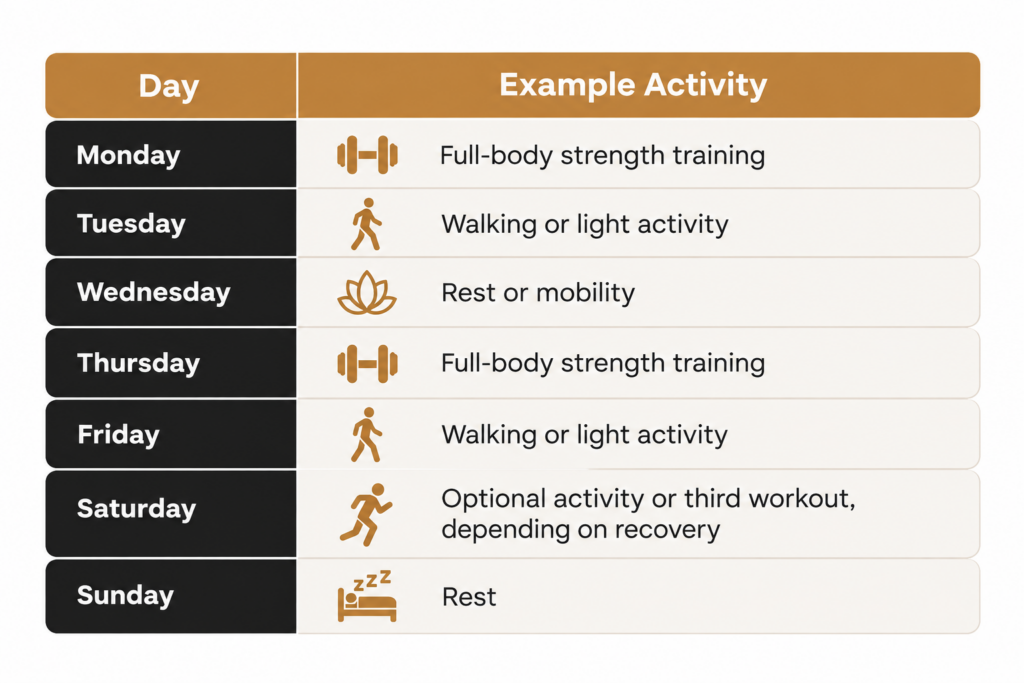
Someone returning to exercise after years of inactivity may need a lighter starting point, while a person who already walks, cycles, or plays recreational sports may be able to handle more.
Your schedule should reflect your current ability rather than somebody else’s routine.
If structured exercise is new to you, our beginner fitness guide covers the basics of getting started safely and realistically.
How Many Days Is Good to Go to the Gym?
For a beginner, 2–3 gym days per week is often enough to build a solid resistance-training routine without feeling that every day needs to become a workout day.
- 2 days per week: A solid starting point if you’re very busy or returning after a long break. It meets the minimum strength guideline and still produces results.
- 3 days per week: Ideal for most beginners. Full-body sessions with a rest day between them give your muscles time to recover and adapt.
- 4 days per week: Works well once workouts feel manageable and you’re recovering well. Split it into two upper-body and two lower-body days, or alternate strength and cardio.
- 5+ days per week: Usually unnecessary at the start. More isn’t always better when your body is still adapting.
The exact exercises should depend on the individual rather than being copied from somebody else’s routine.
For beginners, functional training can provide a practical way to build strength while improving the movement patterns used in everyday life.
Instead of focusing only on how much weight you can lift, functional training can develop strength, mobility, coordination, and movement patterns that carry over into everyday activities.

Strength Training and Cardio Do Not Need the Same Schedule
Strength Training
For overall health, strength work should target the major muscle groups at least twice each week.
For beginners, full-body training can be an efficient way to meet this recommendation without needing a complicated body-part split.
Cardio and Everyday Activity
Aerobic activity can be spread across several days.
Walking, cycling, swimming, and similar activities can all contribute toward weekly aerobic exercise recommendations. You can also break that activity into shorter sessions rather than completing it all at once.
For example, someone might complete two strength workouts and take several 20- to 30-minute walks throughout the week.
That can be a more realistic routine than trying to make every gym visit an intense workout.
How Long Should Beginner Workouts Be?
There is no required workout length for beginners.
A focused workout that covers the exercises in your program with proper technique and reasonable rest periods can be more productive than staying in the gym simply to make the session longer.
Workout duration will depend on:
- The number of exercises
- Sets and repetitions
- Rest periods
- Exercise complexity
- Current fitness level
- Training goal
Instead of focusing on the clock, pay attention to the quality of your movement and whether you can complete the session without your technique breaking down.
If you are unsure what a structured workout should look like, our guide to a first personal training session explains what beginners can expect.
How Much Recovery Do Beginners Need?
Recovery allows your body to adapt to training.
For strength training, avoid repeatedly working the same muscle groups hard on back-to-back days when you are new to exercise. Leaving a day between full-body resistance sessions can make it easier to recover and return with better energy and technique.
Your recovery needs can also be affected by:
- Sleep
- Nutrition
- Stress
- Training intensity
- Daily activity
- Previous fitness experience
Some temporary muscle soreness can be normal after unfamiliar exercise. Sharp, persistent, or worsening pain is different and should not simply be pushed through.
Should Workout Frequency Change Based on Your Goal?
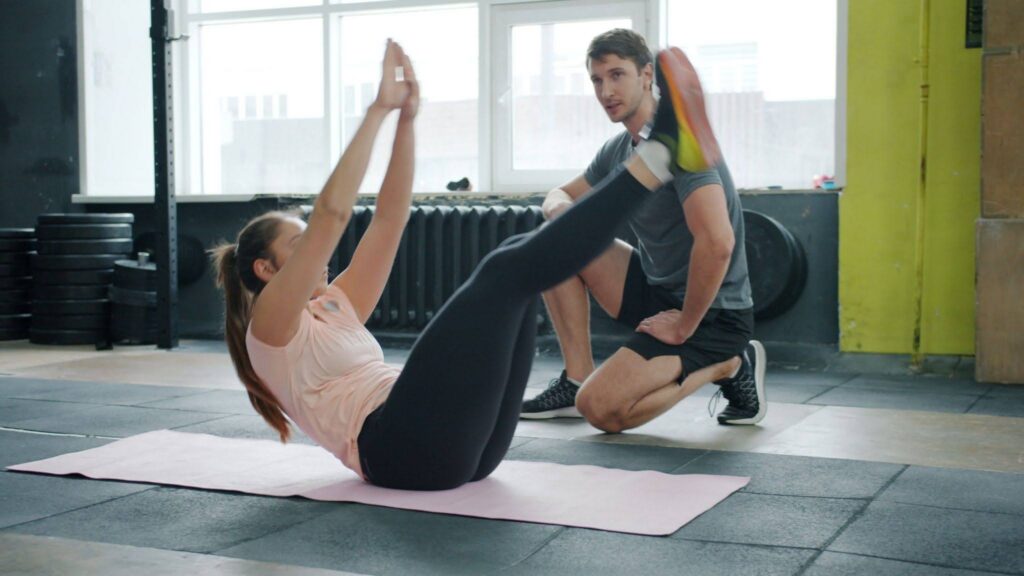
Your training frequency should reflect the result you are working toward, whether that is general fitness, fat loss, or building strength.
General Fitness
Someone focused on improving strength, mobility, and general fitness may do well with two or three full-body strength sessions alongside regular walking or other aerobic activity.
Fat Loss
You do not need daily workouts to make progress with fat loss.
Exercise can support calorie expenditure, fitness, and muscle retention, but nutrition, daily movement, sleep, and consistency also influence results.
MK Fitness’s fat loss training combines individualized workouts with nutrition support rather than relying on excessive training volume.
Building Strength
Beginners interested in becoming stronger can start with basic movement patterns and gradually increase resistance, repetitions, or exercise difficulty.
Advanced bodybuilding-style programs or complicated training techniques are not necessary when you are first building a foundation.
When Should You Add Another Workout?
Once your current routine feels manageable, you can consider progressing it.
Signs that you may be ready include:
- You complete your current sessions consistently.
- You recover well between workouts.
- Your technique remains controlled.
- Your current workload no longer feels overly demanding.
- An additional workout supports your specific goal.
- The extra session fits realistically into your week.
Progress does not always mean adding another gym day.
You may instead increase the resistance, perform additional repetitions, improve your movement quality, or advance to a more challenging exercise.
Why a Personalized Training Schedule Can Help
There is no universal beginner workout schedule because people do not start from the same place.
One person may already walk every day but have little strength-training experience. Another may be returning to fitness after several years. Someone else may be focused specifically on fat loss, strength, mobility, or improving everyday movement.
Personal training at MK Fitness is built around these individual differences. Programs are tailored to the client’s goals, schedule, fitness level, and lifestyle rather than following the same routine for everyone.
MK Fitness also offers body composition analysis, giving clients another way to evaluate progress beyond body weight alone.
For people who struggle to stay consistent on their own, personalized coaching can also provide structure, accountability, and a clearer progression plan.
Build a Routine You Can Maintain
So, how often should beginners work out?
For many healthy beginners, starting with two full-body strength workouts per week and progressing toward three when appropriate is a sensible approach. Walking and other aerobic activity can be added throughout the week according to your ability and schedule.
The goal is not to do as much as possible in the first few weeks.
It is to establish a routine you can continue, improve, and build on.
At MK Fitness, training plans are designed around your individual starting point, lifestyle, and goals. You can begin with a free InBody measurement session and consultation to better understand your body composition and discuss a personalized training plan.
Frequently Asked Questions
1. Is working out three days a week enough for a beginner?
Yes. Three well-planned workouts can provide plenty of training for a beginner, especially when they include appropriate strength exercises and are supported by regular daily activity.
2. Can beginners exercise every day?
You can stay active every day, but every day does not need to be an intense gym session. Walking, mobility work, and lighter activities can be used between more demanding workouts.
3. Is going to the gym twice a week enough?
Two structured full-body strength workouts can be a reasonable starting point and align with general recommendations to perform muscle-strengthening activity on at least two days per week.
4. Should beginners take rest days?
Yes. Rest days can help you recover between demanding workouts and maintain better energy and exercise quality.
5. When should I move from two workouts to three?
Consider adding a third session once your current routine feels manageable, your recovery is good, and you can maintain proper technique throughout your workouts.
6. Should I work with a personal trainer as a beginner?
You do not need a trainer to begin exercising, but professional guidance can be helpful if you want support with technique, exercise selection, progression, or building a realistic routine. Our guide on how to start with a personal trainer explains what to expect.


